- Home
- About Us
- Orthopaedics / Joint Replacement
- Joint Replacement
- Sports Injury / Arthroscopy
- Trauma Fracture and Management
- Knee
- Hip
- Spine
- Shoulder & Humerus
- Elbow & Radius + Ulna
- Wrist & Hand
- Ankle & Foot Care
- Arthritis Management
- Paediatric Orthopaedics
- Pelvis & Acetabulum Fractures
- General Surgery
- Obstetrics & Gynaecology
- General Medicine
- Dermatology & Aesthetics
- ENT
- Contact Us

Partial Hemiarthroplasty
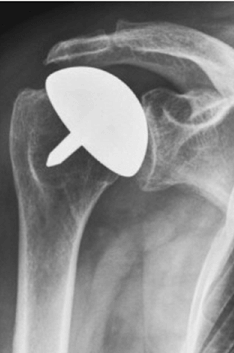
Partial Hemiarthroplasty is a type of shoulder joint replacement surgery where only the damaged head of the humerus (upper arm bone) is replaced with a metal implant, while the shoulder socket (glenoid) is left untouched. This procedure is recommended when the ball of the joint is severely damaged, but the socket remains relatively healthy.
It is often used in cases of complex shoulder fractures, avascular necrosis, or arthritis limited to the humeral head, especially when the rotator cuff is intact.
Who Needs Partial Hemiarthroplasty?
- Severe proximal humerus fractures (especially in elderly patients)
- Avascular necrosis (bone death) of the humeral head
- Post-traumatic shoulder damage
- Isolated humeral head arthritis
- Failed previous shoulder procedures
Benefits of Partial Hemiarthroplasty:
- Relieves chronic shoulder pain
- Restores joint mobility and function
- Less bone removed compared to total
- shoulder replacement
- Shorter surgical time and quicker recovery
- Preserves the natural socket of the joint
Do’s After Surgery
- Wear your sling as advised to protect the shoulder
- Follow your physiotherapy and rehab plan
- Keep your incision clean and dry
- Attend all follow-up appointments
- Use your other hand for daily tasks to reduce strain
Don’ts After Surgery
- Don’t lift heavy objects or raise your arm above shoulder level early on
- Don’t skip rehab sessions—they are crucial for recovery
- Don’t drive until your doctor gives permission
- Avoid smoking and alcohol during recovery
- Don’t ignore signs of infection or complications