- Home
- About Us
- Orthopaedics / Joint Replacement
- Joint Replacement
- Sports Injury / Arthroscopy
- Trauma Fracture and Management
- Knee
- Hip
- Spine
- Shoulder & Humerus
- Elbow & Radius + Ulna
- Wrist & Hand
- Ankle & Foot Care
- Arthritis Management
- Paediatric Orthopaedics
- Pelvis & Acetabulum Fractures
- General Surgery
- Obstetrics & Gynaecology
- General Medicine
- Dermatology & Aesthetics
- ENT
- Contact Us
Elbow – Trauma & Fracture
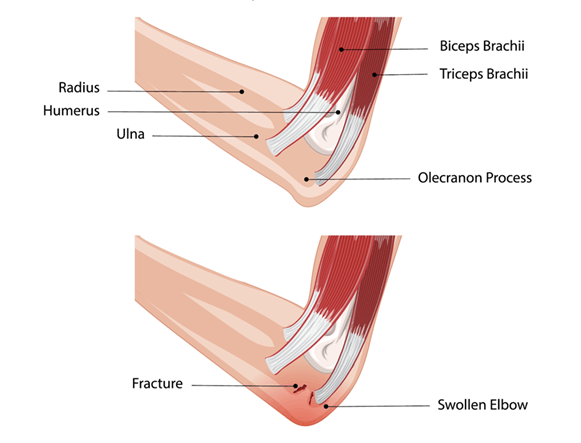
Elbow trauma and fractures are common injuries that can result from falls, sports injuries, road accidents, or direct impact to the arm. These injuries affect the bones forming the elbow joint—the humerus (upper arm bone), radius, and ulna (forearm bones)—and may also involve ligaments, tendons, and nerves.
Prompt diagnosis and proper treatment are esse
Types of Elbow Fractures:
- Distal Humerus Fracture – Break in the lower end of the upper arm bone
- Olecranon Fracture – Fracture of the bony tip of the ulna (elbow point)
- Radial Head Fracture – Common fracture involving the top part of the radius
- Coronoid Process Fracture – Involves the front of the ulna near the joint
- Complex Elbow Dislocations with Fracture – Joint dislocation combined with bone break
- Monteggia Fracture-Dislocation – Fracture of the ulna with radial head dislocation
Symptoms of Elbow Fracture or Trauma:
- Severe pain and swelling around the elbow
- Inability to bend or straighten the arm
- Bruising and tenderness
- Numbness or tingling (if nerves are involved)
- Visible deformity in severe cases
Do’s After Elbow Injury or Surgery
- Keep the arm elevated to reduce swelling
- Follow your doctor’s advice regarding immobilization and rest
- Begin physiotherapy as soon as advised
- Keep the surgical or injured area clean and dry
- Monitor for signs of infection or circulation issues
- Attend follow-up appointments and imaging reviews
Don’ts After Elbow Injury or Surgery
- Do not lift heavy objects with the affected arm
- Avoid excessive arm movement before healing is confirmed
- Don’t skip physical therapy sessions
- Avoid smoking—it delays bone and soft tissue healing
- Do not self-adjust splints or braces