- Home
- About Us
- Orthopaedics / Joint Replacement
- Joint Replacement
- Sports Injury / Arthroscopy
- Trauma Fracture and Management
- Knee
- Hip
- Spine
- Shoulder & Humerus
- Elbow & Radius + Ulna
- Wrist & Hand
- Ankle & Foot Care
- Arthritis Management
- Paediatric Orthopaedics
- Pelvis & Acetabulum Fractures
- General Surgery
- Obstetrics & Gynaecology
- General Medicine
- Dermatology & Aesthetics
- ENT
- Contact Us

Shoulder & Humerus – Intramedullary (IM) Nailing
Intramedullary (IM) nailing of the humerus is a surgical procedure used to treat fractures of the upper arm bone (humerus). It involves inserting a metal rod (nail) into the central canal of the humerus to stabilize and align the bone fragments. This technique is particularly useful for diaphyseal (shaft) fractures and selected proximal humerus fractures, often caused by trauma, falls, or high-impact injuries.
IM nailing is a minimally invasive, load-sharing fixation method that allows early mobilization and promotes faster bone healing.
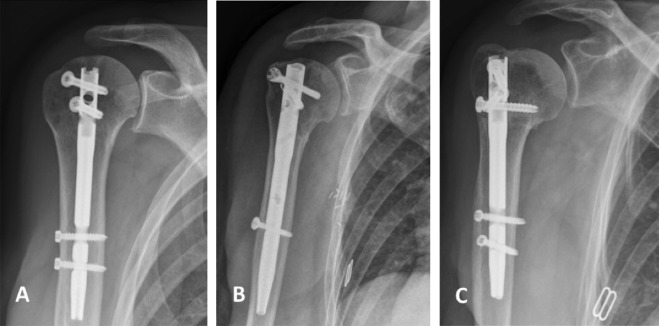
When is Humeral IM Nailing Recommended?
- Mid-shaft (diaphyseal) fractures of the humerus
- Complex or comminuted fractures
- Fractures not healing with conservative treatment
- Pathological fractures (due to bone weakness from disease)
- Proximal humerus fractures (in select cases)
Procedure Overview:
- Preoperative Evaluation: Imaging tests like X-rays or CT scans are done to assess the fracture type and plan the surgery.
- Anesthesia: The procedure is usually done under general or regional anesthesia.
- Fracture Reduction & Nail Insertion: The surgeon aligns the broken bone fragments and inserts a metal rod through a small incision—either at the shoulder (antegrade) or near the elbow (retrograde). The nail is secured with locking screws at both ends.
- Closure & Recovery: The incision is closed, and the arm is supported in a sling. Early physical therapy is usually started to regain movement and strength.
Do’s After IM Nailing of the Humerus
- Wear a sling as recommended to protect the arm
- Perform gentle physiotherapy to maintain shoulder and elbow mobility
- Keep the surgical site clean and dry
- Take medications as prescribed for pain and inflammation
- Attend all follow-up appointments and X-rays to monitor healing
Don’ts After IM Nailing of the Humerus
- Avoid lifting heavy weights or pushing with the affected arm
- Do not skip physical therapy sessions
- Don’t immerse the surgical wound in water until fully healed
- Avoid smoking and alcohol, which can delay bone healing
- Don’t ignore signs of infection such as fever, redness, or drainage at the incision site