- Home
- About Us
- Orthopaedics / Joint Replacement
- Joint Replacement
- Sports Injury / Arthroscopy
- Trauma Fracture and Management
- Knee
- Hip
- Spine
- Shoulder & Humerus
- Elbow & Radius + Ulna
- Wrist & Hand
- Ankle & Foot Care
- Arthritis Management
- Paediatric Orthopaedics
- Pelvis & Acetabulum Fractures
- General Surgery
- Obstetrics & Gynaecology
- General Medicine
- Dermatology & Aesthetics
- ENT
- Contact Us

Joint Preservation Surgeries
Knee Arthroscopy:
Knee arthroscopy and other joint preservation surgeries are minimally invasive procedures aimed at treating certain knee conditions and preserving the integrity of the knee joint. These procedures are typically recommended when non-surgical treatments have not provided sufficient relief or when there are specific structural issues within the knee that can be addressed through surgery.
High Tibial Osteotomy:
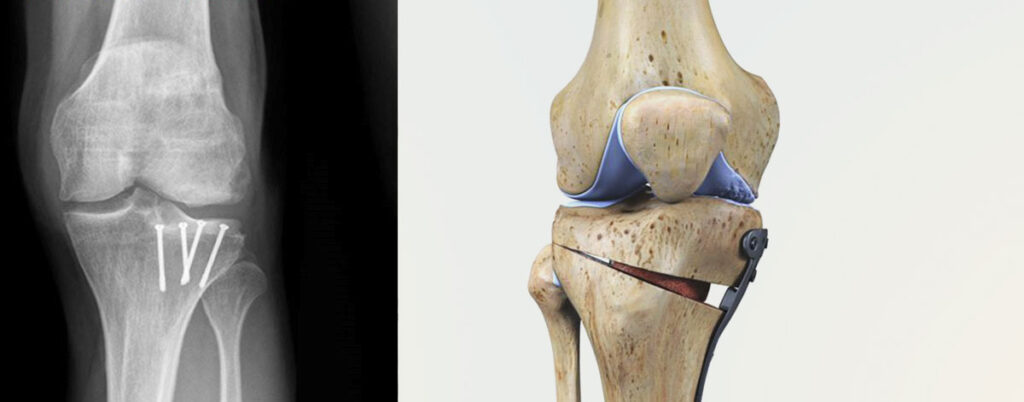
HTO is a surgical procedure that involves making a controlled cut in the upper part of the tibia (shinbone) to realign the knee joint. The goal is to shift the weight-bearing load from the damaged part of the knee to the healthier, less affected part of the knee. By redistributing the forces on the joint, HTO can relieve pain and slow down the progression of osteoarthritis on the affected side of the knee. It is commonly used for medial compartment osteoarthritis, which affects the inner side of the knee joint.
Distal Femoral Osteotomy
DFO is a similar procedure but involves making a controlled cut in the lower part of the femur (thighbone) instead of the tibia. DFO is used when there is lateral compartment osteoarthritis, which affects the outer side of the knee joint. By changing the alignment of the femur, the weight-bearing forces are shifted, which helps to reduce pain and protect the damaged part of the knee.
Do’s for Joint Preservation Surgeries
- Follow Pre-operative Instructions: Adhere to your surgeon’s pre-operative guidelines, which may include fasting instructions and medication restrictions.
- Prepare Your Home: Make sure your home is safe and accessible for your recovery, with clear pathways and assistive devices (e.g., crutches) if needed.
- Comply with Medications: Take prescribed medications, including pain relievers and antibiotics, as directed to manage pain and prevent infections.
- Keep the Incision Clean: Follow your surgeon’s instructions on caring for the surgical incision to prevent infections and promote proper healing.
Don’ts for Joint Preservation Surgeries
- Overexert Yourself: Avoid putting excessive stress on the operated joint during the early stages of recovery. Follow your physical therapist’s guidelines and gradually increase activity as advised.
- Neglect Physical Therapy: Continue with your physical therapy sessions diligently to ensure a successful recovery and improve joint function.
- Ignore Signs of Infection: If you experience signs of infection, such as fever, increased redness, swelling, or drainage from the incision, contact your surgeon immediately.
- Engage in High-Impact Activities: Avoid high-impact exercises or activities that may put strain on the repaired joint.