- Home
- About Us
- Orthopaedics / Joint Replacement
- Joint Replacement
- Sports Injury / Arthroscopy
- Trauma Fracture and Management
- Knee
- Hip
- Spine
- Shoulder & Humerus
- Elbow & Radius + Ulna
- Wrist & Hand
- Ankle & Foot Care
- Arthritis Management
- Paediatric Orthopaedics
- Pelvis & Acetabulum Fractures
- General Surgery
- Obstetrics & Gynaecology
- General Medicine
- Dermatology & Aesthetics
- ENT
- Contact Us

Physiotherapy
Spondylolisthesis is a condition where one vertebra in the spine slips forward over the one below it. This slippage can cause back pain, stiffness, nerve compression, and sometimes radiating leg pain (sciatica). It is commonly seen in the lumbar (lower back) region and may result from degeneration, trauma, congenital defects, or stress fractures (spondylolysis).
Physiotherapy is a highly effective non-surgical treatment for managing symptoms, improving spine stability, and preventing further progression in mild to moderate cases.
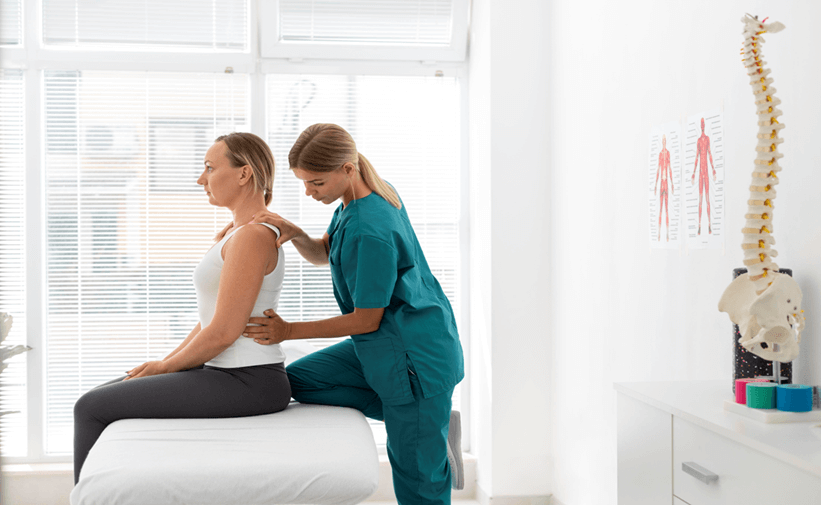
Goals of Physiotherapy in Spondylolisthesis:
- Reduce pain and inflammation
- Improve spinal alignment and posture
- Strengthen core and back muscles to support the spine
- Enhance flexibility and mobility
- Prevent progression of the slippage
- Avoid or delay need for surgery
Key Physiotherapy Techniques Used:
- Pain Relief Modalities
- TENS (Transcutaneous Electrical Nerve Stimulation)
- Ultrasound therapy
- Ice/heat therapy
- Core Strengthening Exercises
- Focus on deep abdominal and lumbar muscles (e.g. transverse abdominis)
- Helps reduce stress on the spine
- Stretching Exercises
- For hamstrings, hip flexors, and lower back
- Reduces stiffness and improves flexibility
- Postural Training
- Teaches proper sitting, standing, and lifting techniques
- Prevents stress on the slipped vertebra
- Manual Therapy (if required)
- Gentle mobilization to improve spinal mechanics
- Avoided in unstable or high-grade slips
- Activity Modification Guidance
- How to safely perform daily tasks
- Lifestyle adjustments to prevent flare-ups
Do’s During Physiotherapy
- Perform exercises regularly as prescribed
- Maintain good posture at all times
- Use a lumbar support belt if recommended
- Practice safe lifting techniques
- Follow-up consistently with your physiotherapist
Don’ts During Recovery
- Avoid heavy lifting or high-impact activities
- Do not perform forward bending or deep spinal flexion
- Don’t ignore persistent pain or nerve symptoms
- Avoid prolonged sitting or standing without breaks
- Don’t skip sessions or self-medicate without advice