- Home
- About Us
- Orthopaedics / Joint Replacement
- Joint Replacement
- Sports Injury / Arthroscopy
- Trauma Fracture and Management
- Knee
- Hip
- Spine
- Shoulder & Humerus
- Elbow & Radius + Ulna
- Wrist & Hand
- Ankle & Foot Care
- Arthritis Management
- Paediatric Orthopaedics
- Pelvis & Acetabulum Fractures
- General Surgery
- Obstetrics & Gynaecology
- General Medicine
- Dermatology & Aesthetics
- ENT
- Contact Us

Decompression Surgery
Spinal stenosis is a condition where the spinal canal becomes narrowed, putting pressure on the spinal cord or nerve roots. It commonly affects the cervical spine (neck) or lumbar spine (lower back). When associated with arthritis, the condition worsens due to bone spurs, thickened ligaments, and disc degeneration.
Decompression surgery is often recommended when non-surgical treatments (like medication, physiotherapy, or injections) fail to relieve symptoms. The goal of surgery is to remove the structures causing nerve compression and restore mobility, strength, and quality of life.
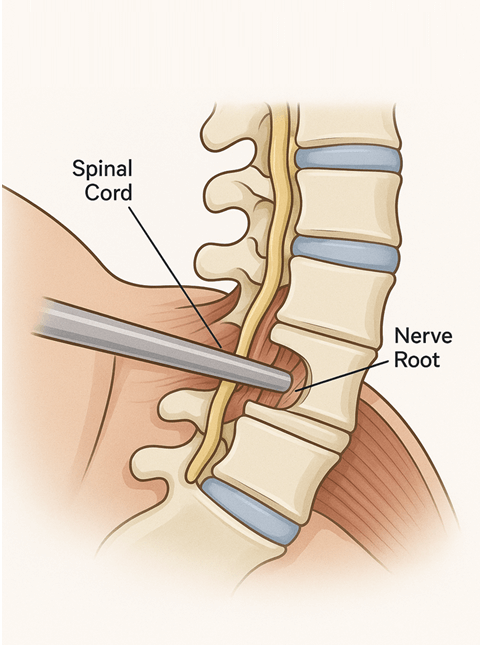
Symptoms of Cervical or Lumbar Stenosis:
- Cervical (Neck) Stenosis:
- Neck pain or stiffness
- Tingling/numbness in arms or hands
- Difficulty with balance and coordination
- Weakness in upper limbs
- Lumbar (Lower Back) Stenosis:
- Lower back pain
- Numbness, tingling, or weakness in legs
- Pain that worsens with walking or standing (neurogenic claudication)
- Relief with bending forward or sitting
Decompression Surgical Options:
- Laminectomy: Removal of the lamina (roof of the spine) to widen the spinal canal
- Foraminotomy: Widening of the nerve exit passage
- Discectomy: Removal of herniated disc material
- Laminoplasty: Opening the spinal canal without removing bone (mostly cervical spine)
- Minimally Invasive Decompression: Uses smaller incisions for quicker recovery
In some cases, decompression may be combined with spinal fusion to stabilize the spine, especially in patients with spinal instability or deformity.
Do’s After Decompression Surgery
- Follow your surgeon’s instructions on activity and posture
- Begin walking as recommended to promote healing
- Keep your incision clean and dry
- Start physiotherapy when advised to restore mobility and strength
- Take prescribed medications on time
- Maintain a healthy diet and avoid smoking
Don’ts After Surgery
- Avoid bending, lifting, or twisting in early recovery
- Don’t ignore new pain, numbness, or signs of infection
- Avoid prolonged sitting or standing without breaks
- Don’t skip follow-up visits or rehab sessions
- Avoid high-impact activities until cleared by your doctor